Since January 20, 2025, the Trump administration has initiated a broad effort to reduce the size of the federal bureaucracy. Federal employment has dropped by 219,922 positions over the last 12 months. Actions taken by the administration include layoffs of probationary employees, reduction in force (RIF) notices, and the deferred retirement program. The Great Lakes region alone between the end of 2024 and the end of 2025 lost an estimated 19,450 federal jobs.
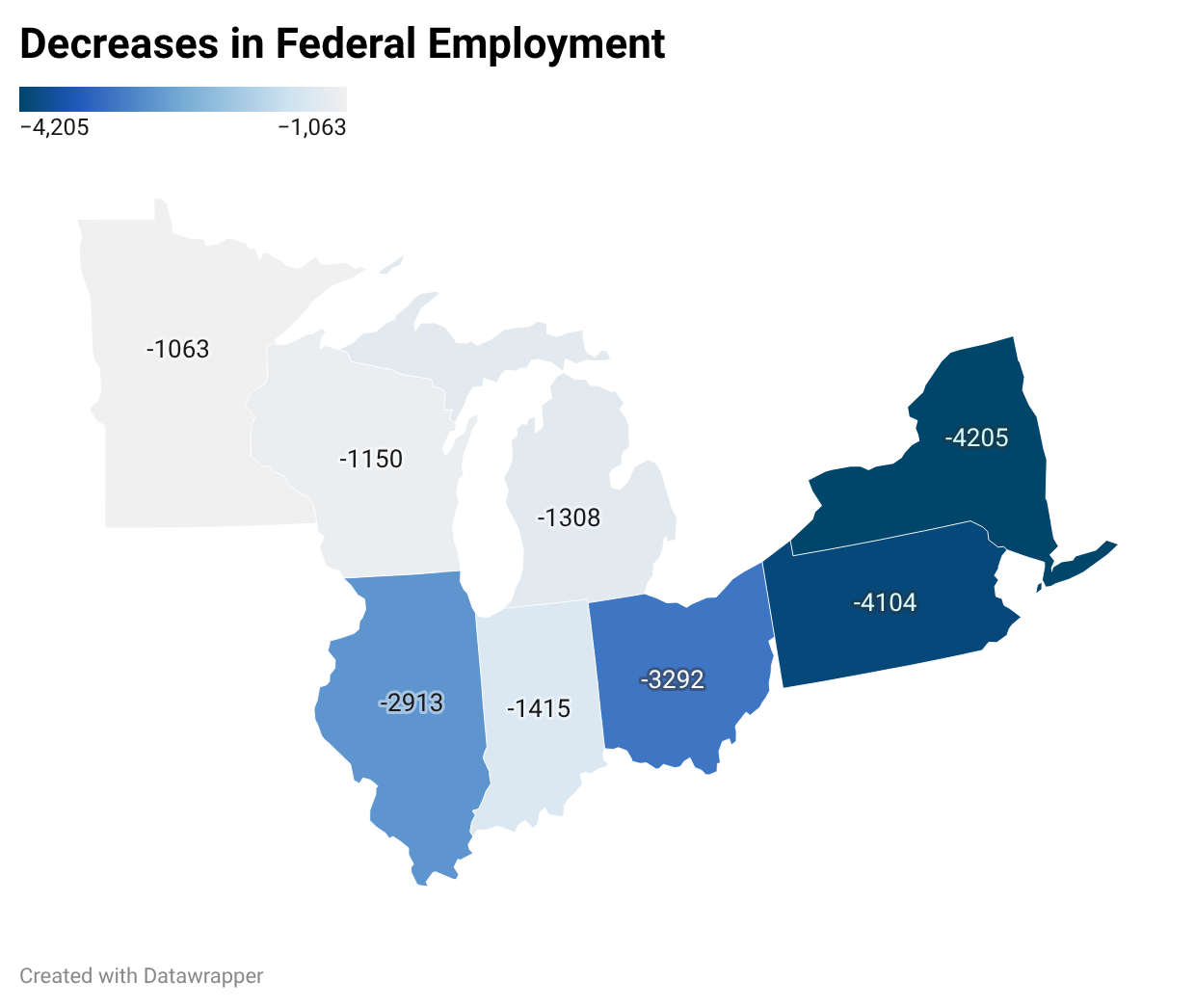
In January, over 800 National Oceanic and Atmospheric Administration (NOAA) employees were fired from their jobs and another 500 accepted the deferred resignation offer, cutting the agency’s workforce by roughly 10 percent. The consequences were especially pronounced for offices like NOAA’s Great Lakes Environmental Research Laboratory (GLERL) in Ann Arbor, Michigan, which saw its workforce reduced by at least 20 percent. Fifteen employees were laid off, including the laboratory’s entire eight-person communications team. In total, NOAA lost 29 total jobs in Michigan according to the Office of Personnel Management’s (OPM) federal workforce data.
Each spring, the Great Lakes Fishery Commission treats Great Lakes tributaries with lampricide, a chemical that kills sea lamprey larvae without detrimental effects to other wildlife or the surrounding environment. This work is critical to protect the Great Lakes’ $5 billion fishery.
In 2025, the program had a delayed start due to the Trump administration’s layoffs and hiring freezes in the U.S. Fish and Wildlife Service (FWS). FWS probationary employees who work on the lamprey program full-time were fired in February 2025, but they were hired back later that spring. Likewise, while a hiring freeze would have prevented the hiring of 25 seasonal workers, this too was reversed, and the employees were hired on a delayed schedule.
Other federal agencies with key roles in Great Lakes conservation and management also experienced significant staffing disruptions. The National Park Service (NPS) in particular is an agency that was heavily impacted by the hiring freeze, which was enacted in January 2025 and extended by the current administration until fiscal year 2026. NPS relies heavily on seasonal workers in the summer months, when park attendance is at its yearly high. NPS typically hires between 7,000 and 8,000 seasonal employees each year. This year, NPS was able to hire roughly 5,700.
Seasonal workers are represented in the graph below in the “expired appointment” category, which also includes temporary workers with positions lasting one year or less, with a specific expiration date.
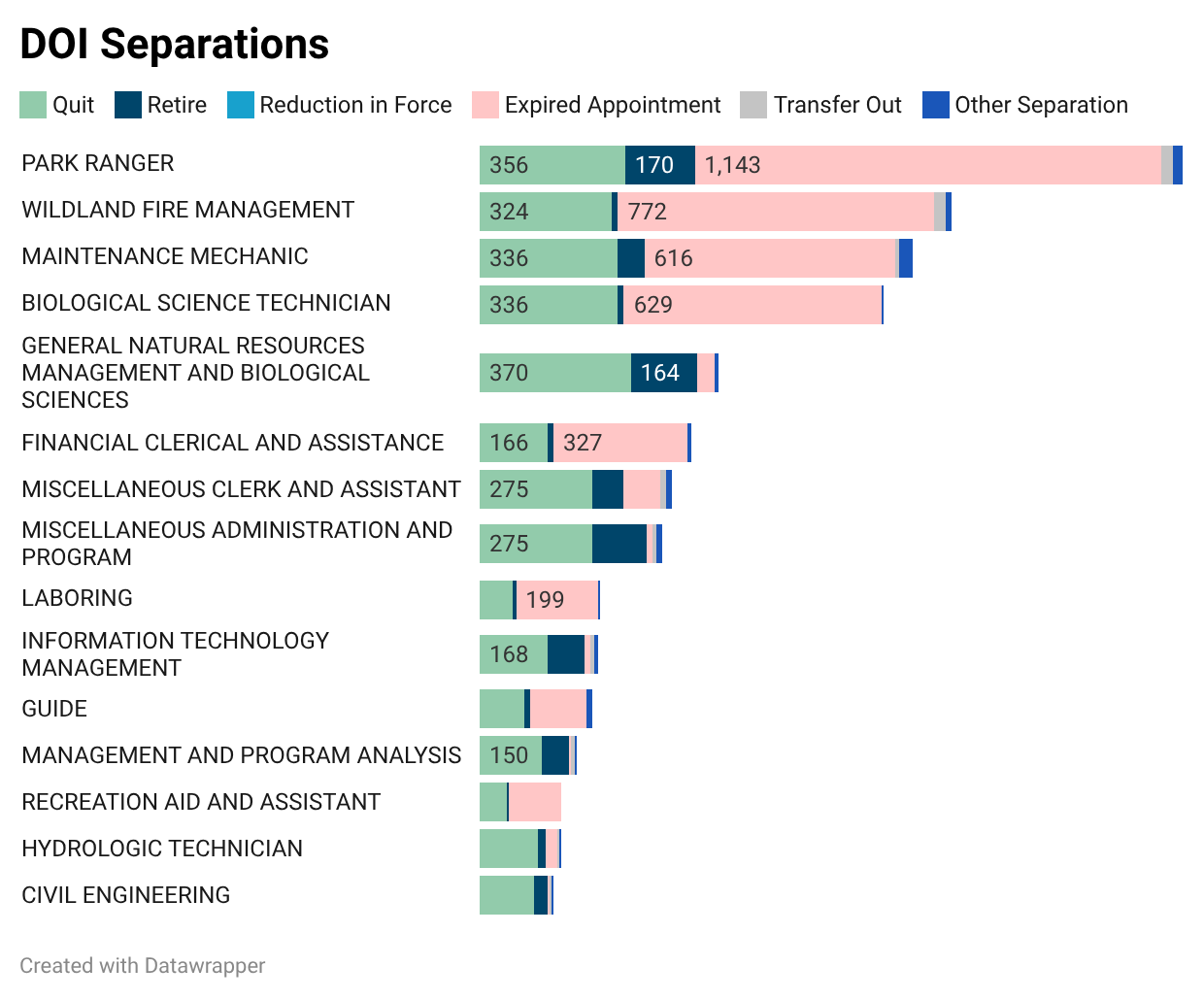
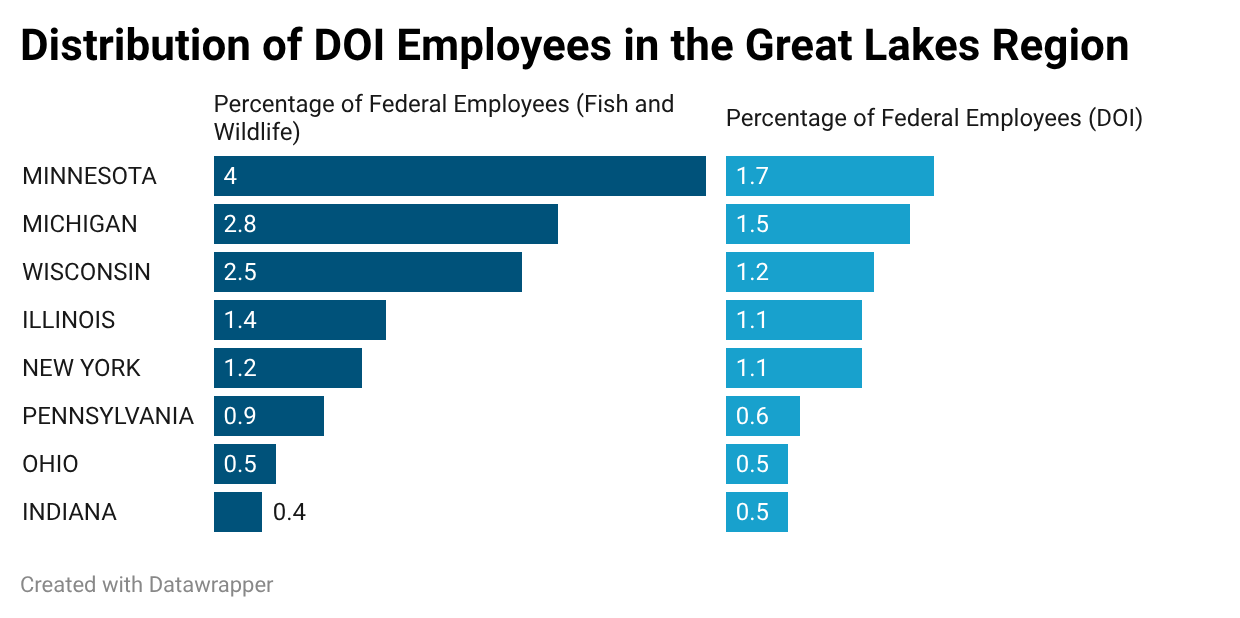
In the Great Lakes region, DOI separated from 231 employees, including 104 from FWS. Although the region accounted for only 8.2 percent of DOI employees in 2024, it employed a disproportionately high share of FWS staff, nearly 14 percent. In October 2025, the President issued an executive order that continued the trend of restricting federal hiring. According to OPM’s federal recruitment numbers, only one job in FWS has been posted in the Great Lakes region since.
Arguably the federal agency that experienced the most turbulent interruptions is the Environmental Protection Agency (EPA). In December of last year, the EPA began returning many probationary employees to work after they had spent most of 2025 on administrative leave. Probationary staff are less than a year into their current roles and have fewer job protections than permanent employees.
These workers were affected by a series of shifting directives and reversals under the Trump administration last spring. In a series of emails, they were first fired and later reinstated but placed on administrative leave with full pay and benefits. Finally, after nearly nine months of uncertainty, an email was sent out on November 18th bringing them back into the office in early December. Some employees, however, received a follow-up email the week of Thanksgiving that stated, “Your position has been identified as having DEI/EJ responsibilities and the agency is electing to keep you on administrative leave at this time.”
The short-term spending patch that reopened agencies also put further federal layoffs on hold, but with the expiration date approaching this month, the future of EPA and its workforce is still uncertain.
While federal job cuts were implemented nationwide, the concentration of specialized agencies and employees in the Great Lakes region meant that staffing reductions carried heightened local consequences. The loss of personnel at institutions such as GLERL and the Fish and Wildlife Service not only affected federal employment levels but also threatened the capacity for scientific research, environmental monitoring, and ecosystem protection in the Great Lakes. In the coming year, federal workforce policies, and their implications for the Great Lakes region, will warrant close scrutiny.
Reported by NEMWI Intern Asia Simms, Northeastern University graduate.