Northeast-Midwest Institute and National Marine Sanctuary Foundation Host Briefing on Capitol Hill
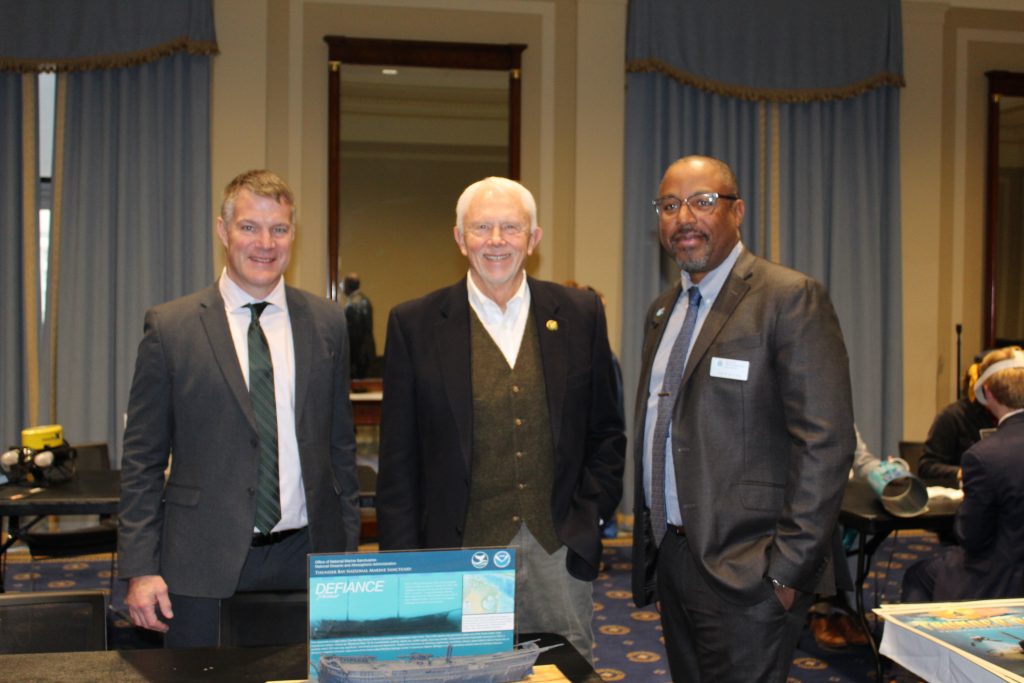
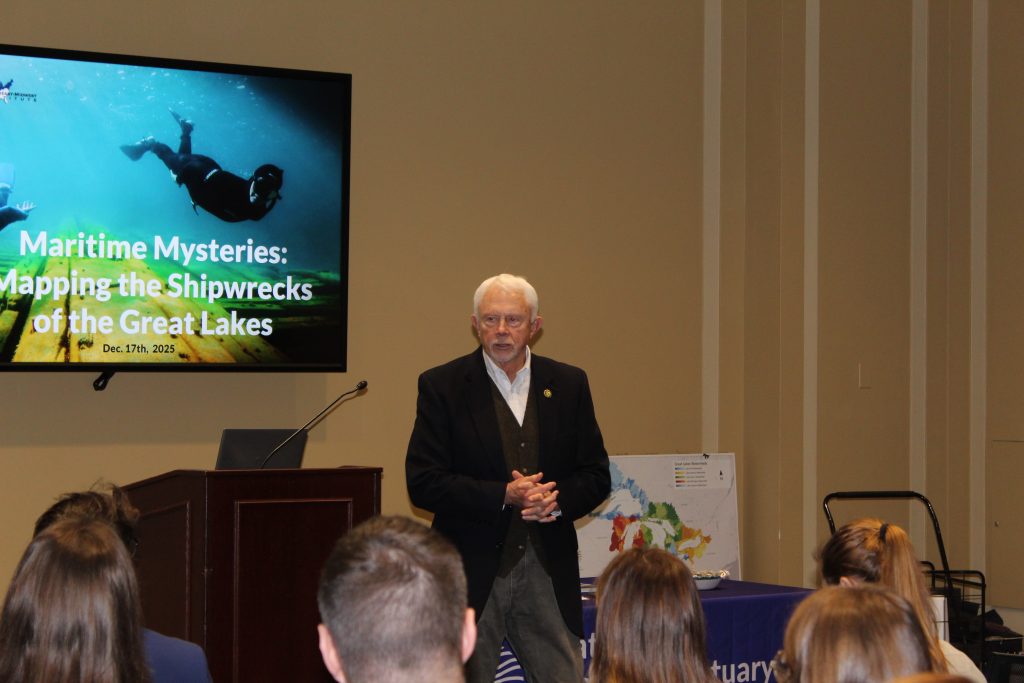

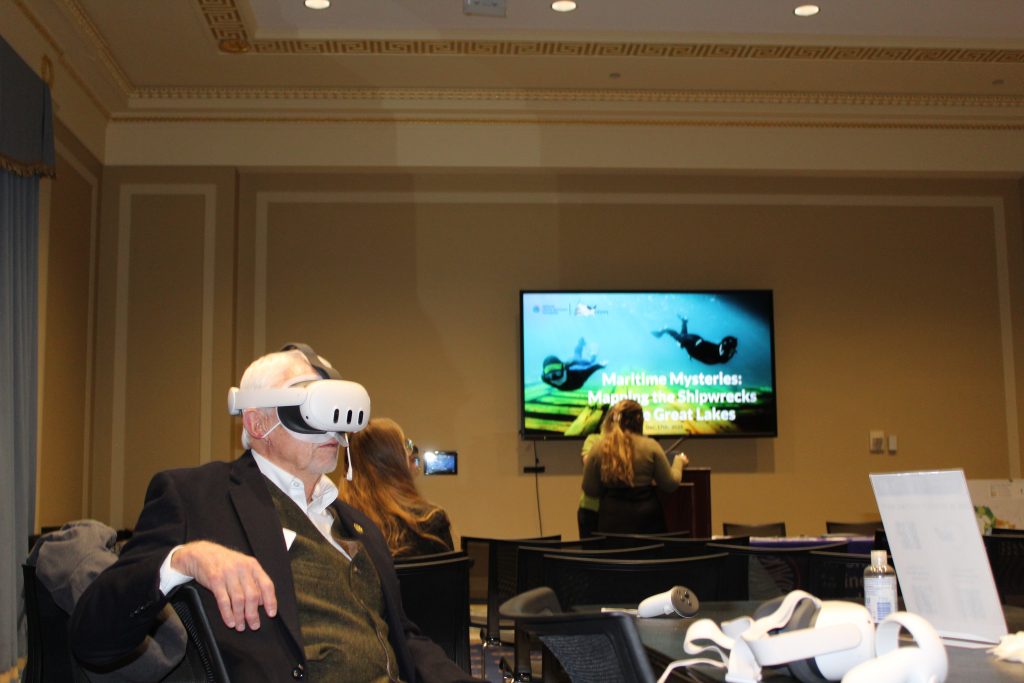
Top left: Thunder Bay and Lake Ontario Superintendent Jeff Gray (left), Rep. Jack Bergman (center), and NMFS President and CEO Joel Johnson (right) pose in front of a 3d shipwreck model; top right: Rep. Bergman addresses the audience; bottom left: NEMWI Great Lakes Program Manager Alex Eastman addresses the audience; bottom right: Rep. Bergman experiences a shipwreck in virtual reality
NEMWI and the National Marine Sanctuary Foundation (Foundation) recently held a briefing for Congressional staff on Great Lakes Marine Sanctuaries. The briefing was the last of six sessions of the Great Lakes Primer and Orientation Program, generously supported by the Erb Family Foundation, which serves to introduce Great Lakes Congressional offices to critical issues. These underwater parks are drivers of scientific discovery and tourism revenues for local communities across the country, and increasingly, in the Great Lakes. Thunder Bay in Lake Huron near Alpena, MI has been a marine sanctuary for a quarter-century, and has been joined in the past five years by Wisconsin Shipwreck Coast (designated in 2021) and New York’s Lake Ontario sanctuaries (designated in 2024). A site on Pennsylvania’s Lake Erie coast is currently undergoing the designation process to become a national marine sanctuary. Attendees heard from an array of speakers and got a chance to see 3D shipwreck models and take a “dive” underwater to explore shipwrecks in marine sanctuaries through virtual reality.
Congressman Jack Bergman (R-MI), co-chair of the Congressional National Marine Sanctuary Caucus and member of the Great Lakes Task Force, opened the briefing with a call to action for those in the room to engage members of Congress in the effort to raise awareness of marine sanctuaries and promote policy that funds and support their work. He spoke on the monumental impact of Thunder Bay National Marine Sanctuary in his district, and the transformative potential of marine sanctuaries across America. Joel Johnson, President and CEO of the Foundation, drew attention to the importance of the Great Lakes as an immense freshwater resource, economic engine, and cultural treasure. The continued support and expansion of the national marine sanctuary program in the Great Lakes will bring even more benefits to the communities in the region. NEMWI Great Lakes Program Manager Alex Eastman highlighted the work of the Great Lakes Task Force and discussed the overlap in the issues critical to the ocean and Great Lakes coasts, especially tourism and environmental protection. Finally, Jeff Gray, Superintendent of Thunder Bay and Lake Ontario National Marine Sanctuaries and Regional Supervisor, gave a deep dive on the marine sanctuaries in the Great Lakes. Gray focused on lakebed mapping efforts, which sanctuaries have greatly contributed to. For instance, while only 15% of the Great Lakes have been mapped to modern standards, 95% of the Lake Michigan lakebed within Wisconsin Shipwreck Coast National Marine Sanctuary has been mapped, thanks to the designation of and ensuing work in that marine sanctuary. This mapping has enabled new opportunities for research and education, including discoveries of long-lost shipwrecks and lakebed features that can inform fisheries management and resource protection.