Tracking of Federal Funds

Members of Congress from the Northeast-Midwest region created the Northeast-Midwest Congressional and Senate Coalitions in order to work together on policies that would target federal resources and programs to address the economic challenges facing the region. Their 18 states send more tax dollars to the federal government than any other region of the country, yet receive less in terms of the federal government’s spending.

The Northeast-Midwest Institute was established to research and provide recommendations on public policy initiatives that would address resources to the challenges in the region.

The states in the Northeast-Midwest can ill afford to continue subsidizing economic vitality in other regions of the country when so many of their cities and towns are struggling with a legacy of aging infrastructure, loss of manufacturing capability, population loss, and the need to address environmental remediation. In order to assess progress toward a more equitable distribution of federal funds, the Northeast-Midwest Institute tracks the funding levels of a broad array of programs critical to the region and analyzes their impact. The Institute:

  • Provides a same-day analysis of the president’s budget request, including a description of key programs and an analysis of long-term funding trends of programs critical to the region;
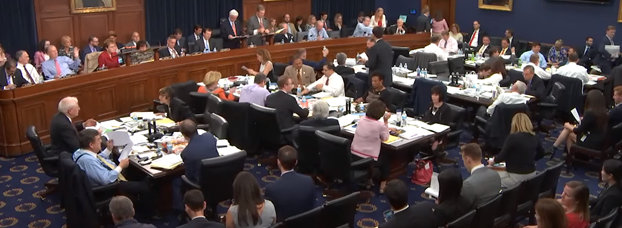
  • Tracks the results of House and Senate committee and floor action on appropriations of relevant federal programs;
  • Provides more detailed appropriations tracking for policy areas of special interest, such as watersheds; and
  • Provides in-depth, detailed analysis of federal spending in the 18 states in the Northeast and Midwest for dues-paying members.

Appropriations Tracking

Key Regional Appropriations

(figures in millions of dollars)

The FY2011-2012 funding levels presented here reflect budget authority, which is the Congressionally-approved amount that federal agencies are permitted to spend.


Program FY2011 FY2012 FY2013 REQ 2014
Agriculture, Rural Development, Food and Drug Administration, and Related Agencies
Rural Energy for America (changed from "Renewable Energy and Efficiency") 75 25.4
19
Value Added Producer Grants 18.9 15
Conservation Stewardship Program (NRCS) 649 768.5 989
Environmental Quality Incentives Program (NRCS) 1,238 1,400 1,350
Agricultural Water Enhancement Program (NRCS) 74 74
60
Chesapeake Bay Watershed Initiative 72 50 50
Farm and Ranch Lands Protection Program (NRCS) 175 150 150
Agricultural Management Assistance Program (NRCS, RMA, AMS) 15 2.5
3
Wildlife Habitat Incentives Program (NRCS) 85 50 45
Wetlands Reserve Program (NRCS) 511 537
268
Grasslands Reserve Program (NRCS/FSA) 100 68.8 0
Sustainable Agriculture Research and Education (SARE) 14.5 14.5
23
Conservation Reserve Program (FSA) 1,959 2,063 2,160
Commerce, Justice, Science, and Related Agencies
Manufacturing Extension Partnership 128.4 128.4
153.1
Technology Innovation Program 44.9 0
0
Trade Adjustment Assistance for Firms 15.8 15.8 10
Coastal Zone Management Act (grants only) 66.02 65.936
71.15
Great Lakes Environmental Research Laboratory 10.08 9.96
n/a
National Sea Grant College Program 61.356 63
72.75
Great Lakes Observing System 1.4 1.6 n/a
Energy and Water Development, and Related Agencies
Electricity Delivery and Energy Reliability 138.2 136.2
169.0
Energy Efficiency & Renewable Energy 1,835 1,780.5
2,775.7
Weatherization Assistance Program (a subset of WIA) 171 68
184
State Energy Program (a subset of WIA) 50 50
57
Energy Information Administration 95 105
117
Advanced Manufacturing Office (changed from "Industrial Technologies Program") 105.9 112.7
365
Building Technologies Program 207.3 214.7
300
Great Lakes Fishery & Ecosystem Restoration 0 2
0
Dispersal Barrier and Interbasin Study (Chicago Shipping & Sanitary Canal) 12.65 23.584
27.6
Environmental Management Program Upper Mississippi River n/a 17.9
31.97
Harbor Maintenance Trust Fund 877 877
Inland Waterway Trust Fund 75 76
Great Lakes and Mississippi River Interbasin Study (GLMRIS) 3 3
Homeland Security
Pre-Disaster Mitigation Grant Program 0
Flood Mitigation and Flood Insurance Operations
22
Flood Mitigation Assistance Program 55 86 100
Flood Mitigation 69 102 122
Interior, Environment, and Related Agencies
EPA Brownfield Projects (assessment / cleanup) 100.0 94.8 85
EPA Categorical Grants (Sec 128) 49.3 49.3 47.5
Clean Water State Revolving Fund 1,522 1,466.5 1,095
Drinking Water State Revolving Fund 963 917.9 817
Great Lakes Restoration Initiative (GLRI) 300 299.5
300
Great Lakes National Program Office w/n GLRI w/n GLRI
-
Legacy Program w/n GLRI w/n GLRI
-
BEACH Grants 27.7 25.9 28.3
Great Lakes Science Center 9.09 8.9
n/a
Chesapeake Bay Program 54.4 57.3
73
Section 106 Water Pollution Control 229 238.4
258.7
National Estuary Program 16.7 16.7
16.8
Land and Water Conservation Fund (Departments of Interior and Agriculture) 301 322.349
400
National Streamflow Information Program (NSIP) 27.7 28.9
36.2
Cooperative Water Program (CWP) 65.5 62.6
63
USGS National Water Quality Assessment Program 64.2 61.6 62
Labor, Health and Human Services, Education, and Related Agencies
Low Income Home Energy Assist. Prog. (Regular) 4,501 3,472 2,820
LIHEAP Contingency 200 0 150
State, Foreign Operations, and Related Programs
Great Lakes Fishery Commission 24 23.7 19.2
International Joint Commission 3 3
2
Transporation, Housing and Urban Development, and Related Agencies
CDBG Formula Grants 3,303 2,948
2,798
Section 108 Loan Guarantees 6 6
n/a
HUD Brownfields Economic Development Initiative (Brownfields Redevelopment) 0 ____
HOME Investment Partnerships Program 1,607 1,000
950
Tenant-Based Rental Assistance 18,371 18,264 19,989
HOPE VI (revitalization of distressed public housing) 100 ____
Choice Neighborhoods Initiative 65 120 400
Sustainable Communities Initiative 100 0 75
Economic Development Initiative 0 ____
Neighborhood Reinvestment Corporation 233.0 215.0 204
Transportation Planning, Research & Development 9.8 9.0 7
St. Lawrence Seaway Development Corporation 32.26 32.26 32.9
Amtrak (National Railroad Passenger Corporation) (includes operating, capital, and debt subsidies; does not include inter-city passenger rail grants) 1,484 1,418 2,700
Federal Railroad Administration 1,709.2 1,631.6 6,635.0
Federal Transit Administration (Does not include flex funding transfers from highway program) 10,295 (grants only) 6,095.0 10,910.0
TIGER Grants 526.9 500.0 500.0
Grants-in-Aid for Airports 3,515 3,515 2,900
High Speed Intercity Passenger Rail Program
0.0 0 3,660
New Starts and Small Starts 1,600 1,950 1,981.0
National High Performance Rail System, funded within the Rail Account of the Transportation Trust Fund
Current Passenger Rail Service (CA) (TF) (M) 2,700
Research, Development, and Technology (CA) (TF) (M) 55
Rail Service Improvment Program (CA) (TF) (M) 3,660


The Institute compiles information on federal program funding levels to provide members of Congress information on programs of particular importance to the region. This information includes historical levels of federal funding received by states in the Northeast and Midwest so that public officials can track progress in increasing the flow of federal funds to their states, provides information on allocation formulas used to target the funds that determine the amount of funding states or locales receive, and provides information on programs from which states in the region do not currently receive federal funding.

The Northeast-Midwest Congressional and Senate Coalitions actively pursue opportunities to increase the appropriations of targeted programs important to the region. Similarly, they seek to establish federal programs responsive to the economic and social challenges facing the region and its residents.


Federal Spending in the Northeast-Midwest Region

The Northeast-Midwest Institute and the Northeast-Midwest Congressional and Senate Coalitions have tracked and analyzed federal spending and taxation patterns since their founding in the mid-1970s. Most states in the Northeast and Midwest contribute more in taxes to the federal government than they receive back in federal spending, which means the Northeast-Midwest region subsidizes federal spending in the rest of the country. The factors driving the Northeast-Midwest's low return on each federal tax dollar vary within the region. In the Northeast as a whole, higher than average per capita taxation yields a low return on each federal tax dollar despite relatively high levels of federal spending. In the Midwest, the low return on each federal tax dollar stems from relatively low levels of federal spending. Flow of Federal Funds to States

Archives


View All

Latest News